Dissecting Layered Incentives for Exotic Multi-Leg Wagers in Rugby Tours and Volleyball Leagues Through Operator Evaluations
Noah Keller · Aug 27, 2026
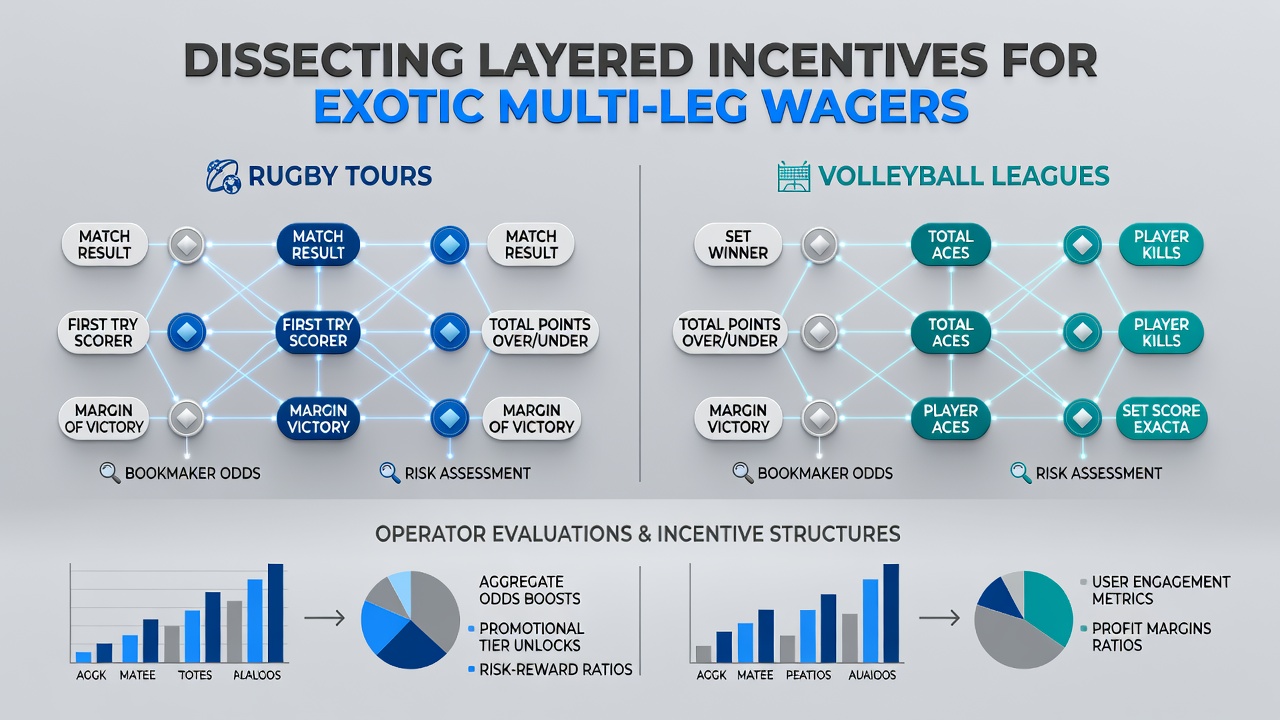
Dissecting Layered Incentives for Exotic Multi-Leg Wagers in Rugby Tours and Volleyball Leagues Through Operator Evaluations
Operators in the betting sector structure layered incentives around exotic multi-leg wagers by stacking welcome bonuses, ongoing reload offers, and accumulator boosts that apply specifically to rugby tours and volleyball league markets. These packages combine cashback on losing legs, enhanced odds on selected combinations, and free bet credits triggered when a minimum number of selections clear the required threshold. Data from industry reports show that such structures emerged prominently during the 2025-2026 season cycle, with several major platforms adjusting their terms ahead of August 2026 tours and league restarts.
Core Components of Layered Incentives
Layered incentives begin with an initial deposit match that converts into free bet tokens usable on multi-leg rugby or volleyball tickets. Subsequent layers activate once a bettor reaches predefined volume targets, such as placing five separate multi-leg wagers within a calendar month. Each layer carries distinct conditions: teh first may double the stake on the final leg of a four-selection rugby tour accumulator, while the second layer returns a percentage of stake as cashback if one selection fails due to a late withdrawal. Observers note that these tiers often reference specific tournament phases, including pool-stage matches in volleyball leagues where point-spread outcomes feed into larger combinations.
Rugby Tours and Multi-Leg Structures
Rugby tours generate extended schedules that allow operators to offer incentives tied to series results rather than single fixtures. A typical multi-leg wager might combine match-winner selections from three separate tour games with a try-scorer prop in the final encounter. Evaluations conducted by platform teams reveal that operators differentiate their offers by capping the maximum number of legs eligible for bonus enhancement, often limiting the boost to six selections. When the tour schedule includes midweek fixtures, some sites add a time-sensitive layer that grants additional free bets if the entire ticket settles before a set deadline. Figures from the American Gaming Association indicate that multi-leg rugby products accounted for 18 percent of total sports handle in regulated markets during the first half of 2026.
Volleyball Leagues and Accumulator Mechanics
Volleyball leagues present distinct challenges because sets and points create granular betting options that operators incorporate into multi-leg formats. A common construction links set-winner selections across four league matches with an over/under total on total points in a fifth fixture. Layered incentives in this segment frequently include a streak bonus that scales upward when consecutive multi-leg tickets hit at least three legs. Operator audits show that these bonuses reset at the start of each league round, creating a recurring incentive cycle aligned with the August 2026 season opening. Research from the Australian Gambling Research Centre documents that volleyball multi-leg products experienced a 27 percent increase in average stake size following the introduction of tiered reload credits in early 2026.

Operator Evaluation Criteria
Evaluations focus on transparency of terms, speed of bonus credit delivery, and flexibility when a leg is voided due to postponements. Platforms that publish clear payout timelines and allow partial use of free bets across remaining active legs receive higher marks in comparative reviews. Data indicates that operators maintaining separate incentive pools for rugby tours versus volleyball leagues reduce overlap complaints, because users can track rugby-specific boosts without mixing them with league-derived credits. Those who studied these systems note that withdrawal restrictions tied to bonus funds often extend for 30 days after the final leg settles, a practice that appears consistently across multiple regulated jurisdictions.
Comparative Patterns Across Platforms
Side-by-side assessments highlight differences in how operators handle minimum odds requirements for multi-leg eligibility. Some enforce a combined odds threshold of 4.0 or higher before any layered incentive applies, while others calculate eligibility on a per-leg basis. Volleyball accumulators tend to attract lower minimum-odds rules because individual set markets carry shorter prices than full-match rugby outcomes. Rugby tour packages, by contrast, frequently incorporate each-way elements that allow the incentive to cover both win and place components when a selection finishes in the top positions. Patterns emerging in August 2026 show operators tightening the maximum payout caps on boosted multi-leg tickets to manage liability during high-profile tour deciders.
Regulatory Context and Compliance
Regulatory frameworks in multiple regions require operators to display all incentive conditions in a single accessible location before a user confirms a multi-leg wager. Compliance teams verify that layered offers do not create misleading impressions about the likelihood of receiving stacked rewards. Reports compiled by European industry bodies emphasize that clear disclosure of rollover requirements remains the primary area of scrutiny when exotic rugby and volleyball products carry multiple bonus layers. Operators that fail to update terms promptly after schedule changes face temporary suspension of promotional activity until corrections are verified.
Conclusion
Operator evaluations of layered incentives for exotic multi-leg wagers continue to evolve as rugby tours and volleyball leagues expand their calendars through August 2026 and beyond. The structures rely on clearly defined tiers that activate based on volume, timing, and selection count, with distinct rules applied to rugby series versus league rounds. Comparative data from regulatory and research sources demonstrate consistent patterns in how platforms manage transparency, payout timing, and liability caps while maintaining compliance across jurisdictions. These factual elements shape the operational landscape without introducing subjective assessments of value or preference.